
PROCESS

All of our pottery is handcrafted in small batches with regionally-sourced stoneware clays.
After each piece is wheel-thrown, it is carefully dried, trimmed, dried further, bisque fired, glazed, and then glaze fired.
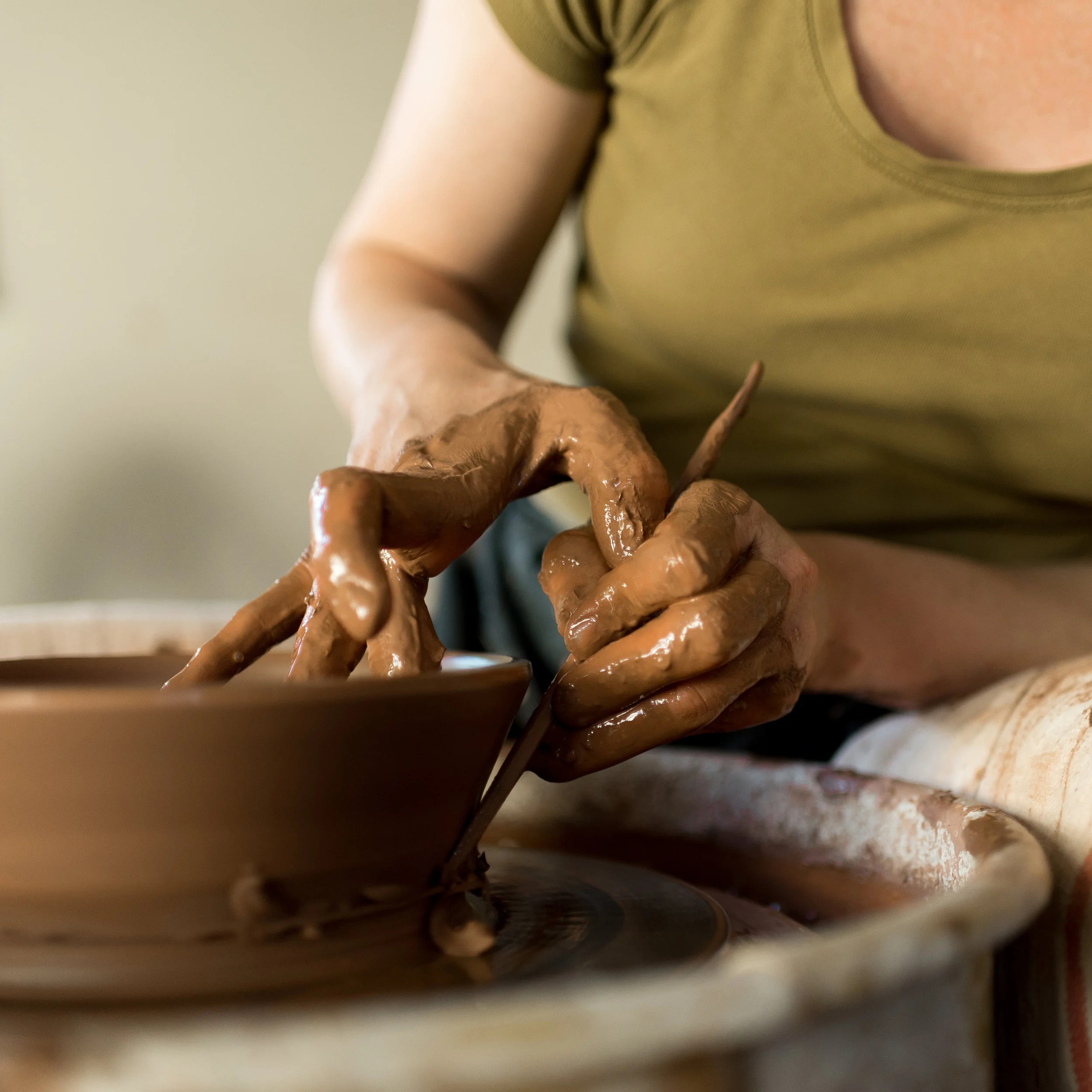
When a piece is thrown on the potter’s wheel, it begins as a malleable ball of clay which is pressed, squeezed and pulled upwards and outwards to form a hollow-shaped vessel. After the piece has partially dried, and can be handled without being deformed, it is inverted and trimmed. Trimming removes excess clay and refines the shape of each piece and creates a foot.
Up until a clay body is bisque fired, it can be reclaimed and used again. Bisque firing is an intermediate step in the process of an eventual glaze firing. Clay goes through several important stages during a bisque firing that make it stable for water-based glaze application, but leave it porous enough for the glaze to adhere to each piece.

After glazes are applied, wares are delicately loaded into the kiln for glaze firing. The stoneware clays that we use most often mature at mid-range temperatures—just shy of 2200 degrees. The effects of the heat during a glaze firing change the glazes from a soft, fragile substance to one that is rock-hard, impervious to water and time.